There is perhaps no houseplant more famous for its dramatic flair than the classic Peace Lily (Spathiphyllum). Revered for their lush, glossy emerald-green leaves and elegant, sail-like white spathe flowers, peace lilies are a beloved staple of indoor gardening. Whether you are styling a chic apartment in San Francisco, an urban high-rise in New York, a sunlit home in Texas, or vibrant living spaces across California and Washington, peace lilies add timeless beauty and unmatched air-purifying power to any room.
However, every peace lily owner knows the heart-stopping moment: you walk into your living room and find your once-proud, upright plant completely collapsed, looking as though it has suffered a fatal botanical catastrophe over night. Within hours of a quick drink, miraculous recovery occurs, and it stands tall once more.
While this built-in drama makes peace lilies incredible living moisture indicators, letting your plant experience chronic “fainting spells” stresses its vascular system, stunts growth, and causes unsightly brown leaf tips. Brought to you by kcplants.com, this comprehensive, expert-led masterclass explores why peace lilies droop, examines the hidden risks of letting them wilt, and shares foolproof strategies to establish a balanced watering routine.
Part I: The Botany Behind the Drama (Why Peace Lilys Collapse)
To understand why peace lilies droop so dramatically, we must examine their hydraulic architecture:
- Hydrostatic Pressure (Turgor Pressure): Peace lilies are native to tropical rainforest floors in Central and South America, where they grow in damp, humid shade. Their massive, broad leaves require an immense volume of water to stay rigid. When water is plentiful in the soil, root pressure pumps liquid upward, inflating plant cells like tiny water balloons. This internal pressure is called turgor pressure, and it is what keeps the stems standing tall.
- The Sudden Collapse: When the soil dries out and moisture depletes, root pressure drops instantly. Without enough water inside the stem cells to maintain structural rigidity, turgor pressure vanishes. The plant’s cells effectively deflate, causing the heavy leaves and stems to sag under their own weight.
- Why They Are “Fainting” Champions: Evolutionarily, this rapid wilting is a survival adaptation. By dropping its leaves flat, the plant temporarily reduces the surface area exposed to drying ambient air, slowing down moisture loss until rain arrives.
Part II: The Hidden Dangers of Chronic Wilting
While watching your peace lily bounce back after a dramatic collapse feels like a magic trick, forcing your plant to “faint” repeatedly takes a severe toll:
- Root Hair Damage: When soil dries out to the point of a complete plant collapse, microscopic root hairs desiccate, shrivel, and die. Repeated trauma prevents the root system from ever reaching full maturity.
- Crispy Brown Leaf Tips: Chronic water fluctuations disrupt the plant’s mineral transport system, depositing excess salts at the tips of the leaves and causing permanent, unsightly browning.
- Susceptibility to Pests and Disease: A stressed peace lily lacks the cellular vigor to defend itself against opportunistic pests like spider mites, mealybugs, and thrips.
Part III: Step-by-Step Guide to Establishing a Balanced Watering Routine
Stopping your peace lily from drooping dramatically starts with moving away from reactive watering (waiting for it to collapse) and moving toward proactive, consistent care.
Step 1: Master the “Finger Test” (Never Wait for the Swoon)
- Instead of waiting for your peace lily to faint, test the soil moisture every few days.
- Push your index finger 1 to 2 inches deep into the soil. If the soil feels dry and crumbly at your fingertips, it is time to water. If it still feels damp or sticks to your skin, wait a few more days.
Step 2: Adopt the Thorough Soak-and-Dry Technique
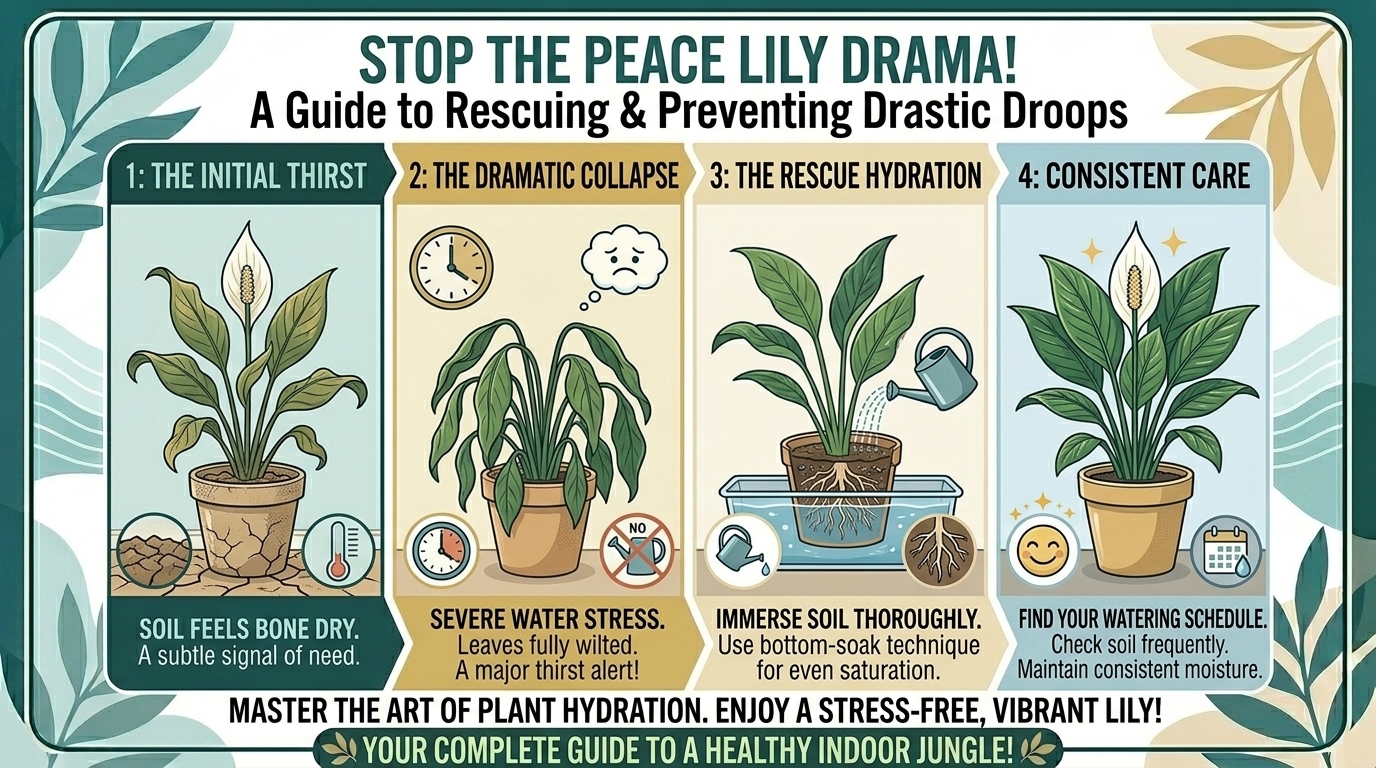
- When your peace lily is ready for water, give it a deep, thorough drink. Pour water evenly over the topsoil until it runs freely out of the bottom drainage holes, or use the bottom watering method (setting the pot in a basin of water for 20 minutes) to ensure 100% even saturation without dry hydrophobic pockets.
- Crucial Rule: Never let your peace lily sit in a pool of standing water in its saucer for more than 15 minutes, as waterlogged soil rapidly induces root rot.
Step 3: Upgrade Your Potting Soil
- If your peace lily seems to dry out and droop within 2 to 3 days after watering, your soil mix may be too dense or degraded. Repot your plant using a rich, moisture-retaining yet well-draining potting mix blended with peat moss, compost, and perlite.
Step 4: Emergency Recovery for Severe Wilting
If your peace lily has already collapsed dramatically and normal watering isn’t rehydrating it fast enough because the soil has gone completely hydrophobic:
- Take the entire potted plant and submerge the nursery pot up to its rim in a bucket of tepid water.
- Let it soak for 30 to 45 minutes until air bubbles stop rising and the soil is fully saturated.
- Remove it, let it drain completely in the sink, and watch your drama queen perk back up within 2 to 4 hours.
Part IV: Regional and Environmental Factors Affecting Peace Lily Thirst
Depending on where you live across our key regions, indoor climate control dramatically alters how often your peace lily needs water:
- San Francisco & New York (Urban Living): Historic apartment buildings often feature intense radiator heating in winter, which plummets indoor humidity and bakes soil dry in record time. Keep your peace lilies away from direct blasts of dry heat.
- Texas, California, & Washington: Expansive sunrooms in Texas and California provide high light and warmth that speed up transpiration, requiring more frequent watering during summer. In Washington, monitor your plants closely as indoor heating systems cycle on during gray, damp winters.
Part V: Pro Tips for Lush, Upright Peace Lilies
- Boost Ambient Humidity: Peace lilies adore humidity. Mist the air around them daily, place pots on pebble trays filled with water, or run a room humidifier to reduce moisture stress.
- Filter Your Water: Peace lilies are sensitive to the fluoride and chlorine found in municipal tap water, which contributes to brown leaf tips. Use filtered water, rainwater, or distilled water whenever possible.
- Provide Bright, Indirect Light: While peace lilies tolerate low light, they grow much stronger, thicker stems and resist wilting better when placed in bright, indirect light (such as near an east-facing window).
10 Frequently Asked Questions (FAQ)
1. Why does my peace lily droop so dramatically when it gets thirsty?
Peace lilies lose internal water pressure (turgor pressure) quickly when soil dries out. Dropping their leaves is a natural survival mechanism designed to reduce surface area and minimize moisture loss through evaporation.
2. Is it harmful to let my peace lily droop before watering it every time?
Yes. Allowing a peace lily to experience chronic wilting damages delicate root hairs, causes crispy brown leaf tips, stunts overall growth, and stresses the plant’s vascular system.
3. How fast does a peace lily bounce back after watering?
When watered thoroughly after a minor wilt, a healthy peace lily will typically perk back up and stand fully upright anywhere from 2 to 6 hours.
4. Why is my peace lily drooping even though the soil is wet?
If the soil is constantly soggy and wet, drooping is actually a symptom of root rot. Rotted roots can no longer absorb water, leaving the plant dehydrated despite damp soil. Check the roots immediately.
5. What kind of water should I use for my peace lily?
Filtered water, distilled water, or rainwater is ideal. Peace lilies are sensitive to chemical additives like fluoride and chlorine in tap water, which cause brown leaf tips.
6. How often should I water my indoor peace lily?
There is no fixed calendar schedule, but generally, peace lilies need watering every 7 to 10 days in spring and summer, and every 10 to 14 days in winter, depending on indoor humidity and temperature.
7. Can I bottom water my peace lily?
Yes! Bottom watering is fantastic for peace lilies because it allows the dry root ball to absorb moisture evenly via capillary action, preventing dry pockets in the soil.
8. Why do the tips of my peace lily leaves keep turning brown?
Brown tips are typically caused by underwatering (letting it droop too often), low indoor humidity, or chemical sensitivity to fluoride and chlorine in tap water.
9. What potting mix do peace lilies prefer?
Peace lilies thrive in a rich, organic potting mix that retains moisture well while still offering good drainage. A blend of standard potting soil, peat moss, and perlite is ideal.
10. Do peace lilies need bright sunlight to stay healthy?
They prefer bright, indirect sunlight. Avoid placing them in harsh, direct midday sun, which will scorch and burn their broad leaves, but don’t tuck them into pitch-black corners either.
Conclusion
The dramatic drooping of a thirsty peace lily is one of the plant world’s most famous quirks. While watching your plant bounce back from the brink of collapse is impressive, establishing a proactive, balanced watering routine protects its root system, prevents unsightly brown leaf tips, and keeps your indoor oasis looking lush and upright year-round. Visit kcplants.com regularly for expert plant care guides, tips, and inspiration to help your indoor jungle thrive!