There is a serene, captivating beauty to styling indoor houseplant collections right along your apartment or home windowsills. Gazing out at a snowy New York street, a chilly San Francisco fog, a brisk Washington evening, or crisp winter nights in Texas while surrounded by lush tropical greenery creates an inviting winter sanctuary.
However, as outdoor autumn temperatures plummet and heating systems roar to life, many urban plant parents face a heartbreaking mystery: despite keeping up with regular watering schedules and adequate indoor lighting, their prized tropical houseplants—such as Fiddle Leaf Figs, Monsteras, Calatheas, and Alocasias—suddenly develop blackening leaves, drop foliage overnight, or experience sudden cellular collapse.
The silent assassin isn’t under-watering or pests. It is the invisible, punishing hazard of drafty winter windowsills.
Brought to you by kcplants.com, this comprehensive, expert-led masterclass explores the brutal botanical science of cold draft shock, explains why single-pane glass and poorly sealed window frames spell disaster for tropical plants, and provides actionable strategies to protect your indoor urban jungle all winter long.
Part I: The Tropical Origin vs. Modern Urban Winter Reality
To understand why cold drafts are fatal to your houseplants, we must look at their evolutionary heritage:
- The Tropical Rainforest Baseline: The vast majority of popular houseplants originated in the warm, stable equatorial understories of Central and South America, Southeast Asia, and tropical Africa. In these native habitats, ambient temperatures rarely fluctuate wildly, hovering comfortably between 70°F and 85°F year-round with high humidity.
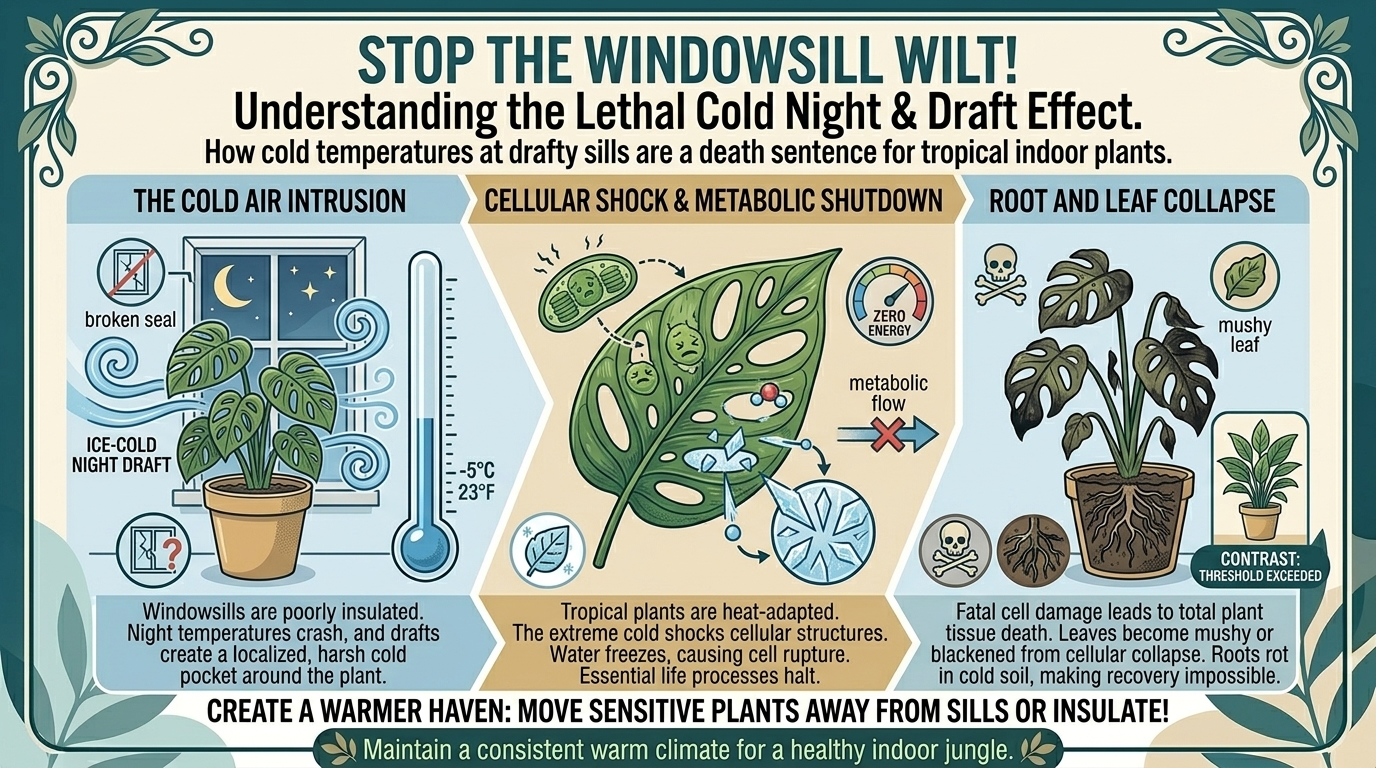
- The Windowpane Thermal Shock: During freezing winter nights, window glass acts as a thermal conductor, plunging the immediate microclimate right against the glass down to near-freezing temperatures (often 40°F or lower on single-pane urban windows). At the same time, interior heating vents push room temperatures up to 72°F.
- The Deadly Gradient: A tropical plant sitting directly on a windowsill experiences a brutal thermal shock gradient: ice-cold air radiating off the glass on one side, and dry, baking radiator heat on the other. This sudden drop in temperature fractures cellular walls and halts plant metabolism instantly.
Part II: The Botanical Science of Cold Draft Damage
When a tropical houseplant is exposed to freezing nighttime window drafts, a cascade of microscopic disasters occurs inside its tissues:
1. Cellular Water Freezing and Expansion
- Plant cells are filled with aqueous cellular fluid. When temperatures drop below 40°F (and certainly below freezing), water molecules inside the plant’s cells begin to contract and approach freezing point. While actual ice crystals puncture cell walls, even non-freezing cold stress disrupts the delicate osmotic balance across cell membranes.
2. Vascular Shutdown (Chilling Injury)
- Tropical plants possess internal plumbing (xylem and phloem) designed for warm temperatures. When exposed to sudden cold drafts, the plant’s vascular cells contract violently. Water transport to the leaves stops completely, while existing water inside the leaves continues to evaporate into the dry indoor air.
3. Immediate Symptoms of Cold Shock
- Water-Soaked Patches: Leaves suddenly develop translucent, water-soaked, dark green or black patches that feel mushy to the touch.
- Rapid Leaf Drop: Plants like Ficus species will drop every single leaf within 24 to 48 hours of experiencing severe thermal shock.
- Stem Collapse: The main stems turn soft, brown, and squishy, signaling total cellular death from the roots up.
Part III: Regional Winter Challenges Across Our Key Hubs
Depending on your geographic location across our key urban regions, winter drafts present unique architectural and environmental hurdles:
- San Francisco & New York: Historic apartments, loft conversions, and high-rise buildings in San Francisco and New York frequently feature beautiful, drafty, single-pane wooden sash windows or uninsulated metal window frames. Cold marine night winds in SF and arctic winter vortexes in NY turn windowsills into miniature frost zones.
- Texas, California, & Washington: While Texas and California winters are milder, sudden overnight freezes or northerers can cause outdoor temperatures to plummet rapidly, chilling uninsulated window glass. In Washington, persistent damp cold combined with uninsulated window frames creates a chilling microclimate that traps moisture and freezes tender tropical roots.
Part IV: Step-by-Step Strategies to Winterize Your Windowsill Plants
You do not have to abandon your sunny windowsills entirely during the winter months. Implement these protective measures to keep your tropical plants safe:
1. The “Evening Shift” Protocol
- Make it a nightly habit during freezing months to pull all sensitive tropical plants back 12 to 24 inches from the window just before sunset. Place them on a sturdy table, plant stand, or kitchen counter away from the glass. In the morning, when the sun is up and the room has warmed, move them back to their bright windowsill spot.
2. Install Thermal Barriers and Double-Glazing Films
- Apply clear insulating window shrink-films over your window frames to create a trapped air barrier that blocks cold glass radiation.
- Place thick cork mats, folded woven placemats, or wooden trivets beneath your ceramic pots. Never place cold terracotta or ceramic pots directly on a freezing marble or aluminum windowsill, as the pot bottom will freeze the soil mass and roots.
3. Seal Window Drafts
- Inspect your window sills for gaps and leaks. Use removable weatherstripping tape or draft stoppers along the base of the window frame to stop cold air currents from blowing directly across your plant foliage.
4. Adjust Your Watering Routine for Winter
- Cold soil combined with wet roots is a death sentence in winter. Because cold temperatures slow down plant metabolism, plants drink a fraction of the water they consume in summer. Always check that the soil is dry deeper down before watering, and use tepid (room temperature) water—never ice-cold tap water that further chills the root ball.
Part V: Pro Tips for Saving a Cold-Damaged Plant
- Do Not Panic-Water: If your plant suffers cold shock and drops leaves, resist the urge to pour water on it. Its roots are damaged and cannot drink. Let the soil dry out slightly and keep the plant in a stable, warm (70°F) location.
- Prune Damaged Tissue: Once black, mushy, or water-soaked leaves have dried up or turned brown, cleanly snip them off with sterilized pruning shears so the plant doesn’t waste energy on dead tissue.
10 Frequently Asked Questions (FAQ)
1. Why do tropical houseplants die on windowsills in winter?
Window glass conducts outdoor cold, dropping the immediate windowsill temperature far below safe levels for tropical species. This causes cellular water contraction, vascular shock, and tissue death.
2. What temperature is too cold for tropical indoor houseplants?
Most tropical houseplants (Monstera, Fiddle Leaf Fig, Calathea, Philodendron) begin experiencing chilling injury and cellular stress when ambient temperatures drop below 50°F to 55°F (10°C to 13°C).
3. Which houseplants are most sensitive to cold winter drafts?
Fiddle Leaf Figs (Ficus lyrata), Weeping Figs (Ficus benjamina), Calatheas, Prayer Plants, Alocasias, and Anthuriums are notoriously sensitive and will drop leaves or collapse immediately from cold drafts.
4. How can I tell if my plant suffered from cold shock or overwatering?
Cold shock presents as sudden, water-soaked, black or mushy leaves occurring right after a cold night or a draft exposure, whereas overwatering causes gradual yellowing, root rot, and a musty soil odor over time.
5. Should I stop opening my windows for fresh air in the winter?
Yes, if you have tropical plants sitting on nearby windowsills. Even a 5-minute blast of freezing winter air rushing through an open window can trigger fatal shock in sensitive tropical foliage.
6. Does putting a cork mat under my pot really help against cold sills?
Yes! Ceramic, concrete, and terracotta pots act as thermal conductors, absorbing cold from marble or metal sills. A thick cork mat or wooden trivet creates an insulating thermal break.
7. Why are the leaves on my windowsill plant turning black and mushy?
Black, mushy leaves are a classic symptom of freezing or severe chilling injury. The cell walls have ruptured, causing the internal fluids to leak out and the tissue to collapse.
8. Can I use a grow light instead of a drafty windowsill in winter?
Absolutely! Moving your plants away from cold windows and placing them under a full-spectrum LED grow light in a warm interior room is one of the best ways to keep them thriving all winter.
9. Should I fertilize my houseplants during cold winter months?
No. Because natural daylight hours drop and plant growth slows down significantly in winter, fertilizing dormant plants causes chemical burn in the roots. Withhold fertilizer from October through February.
10. How do I know if my plant’s roots have frozen?
If the soil freezes solid and the root ball feels like a block of ice, the root tissue is dead. The plant will rapidly wilt from the base up and fail to recover even when brought into a warm room.
Conclusion
Drafty winter windowsills pose a hidden, high-stakes danger to tropical indoor houseplants, turning favorite display spots into freezing hazard zones. By understanding the science of chilling injury, implementing nightly plant-moving routines, adding thermal mats, and sealing window drafts, you can safeguard your indoor urban jungle through the coldest months of the year. Visit kcplants.com regularly for expert winter plant care guides, tips, and inspiration to help your indoor oasis thrive year-round!