Perennial flower beds are the beating heart of a well-designed landscape, returning year after year to offer vibrant color, architectural structure, and seasonal joy. From stately hostas and delicate bleeding hearts to robust peonies and cheerful coneflowers, perennials build a mature, established garden ecosystem. However, seasoned gardeners know that the greatest threat to a perennial’s longevity often lurks silently underground: crown rot.
Crown rot—frequently caused by soil-borne fungal pathogens such as Sclerotium rolfsii, Phytophthora, Rhizoctonia, and Pythium—attacks the critical junction where the plant’s stems meet its root system. Once these pathogens colonize the crown, they choke off the plant’s vascular transport system, causing sudden wilting, yellowing foliage, and rapid collapse. Traditional chemical fungicides can be expensive, toxic to beneficial soil microbiology, and environmentally taxing.
Enter a remarkably simple, inexpensive, and eco-friendly horticultural tool: hydrogen peroxide ($H_2O_2$).
Whether you are managing moisture-heavy perennial beds in Washington, combating summer humidity in Texas, nursing spring perennials through damp soil in New York, protecting Mediterranean garden plantings across California, or managing urban courtyard plots in San Francisco, utilizing natural hydrogen peroxide soil drenches offers an immediate, highly effective rescue treatment.
This comprehensive masterclass explores the pathology of crown rot, the science of hydrogen peroxide in horticulture, step-by-step treatment protocols, and long-term preventative strategies to safeguard your perennial flower beds.
Understanding Crown Rot: The Silent Killer of Perennials
To treat crown rot effectively, you must understand how it initiates and spreads. The “crown” of a perennial plant is the transition zone between the root system and the above-ground stems. It is the powerhouse of the plant, storing energy reserves required for winter dormancy and spring re-emergence.
1. The Pathogen’s Entry Point
Fungal and oomycete pathogens responsible for crown rot are ubiquitous in garden soil. They remain dormant as sclerotia or spores until favorable conditions arise. They do not typically attack healthy, vigorous tissue; instead, they exploit:
- Mechanical Wounds: Scratches from garden tools, insect bites, or pruning cuts.
- Suffocating Moisture: Soil compacted by heavy foot traffic or waterlogged by poor drainage.
- Buried Crowns: Perennials planted too deeply in the soil, which traps moisture against the tender stem tissue.
2. The Symptoms
Infection often begins unnoticed underground. As the fungal mycelium colonizes the crown, above-ground symptoms appear rapidly:
- Leaves turn yellow, wilt during midday heat, and fail to recover overnight.
- Stems pull away easily from the root base with a soft, mushy, brown rot.
- White, cotton-like fungal threads (mycelium) or hard, mustard-seed-like resting bodies (sclerotia) become visible around the base of the stems and topsoil.
The Science of Hydrogen Peroxide in Soil Management
Hydrogen peroxide ($H_2O_2$) is essentially water ($H_2O$) with an extra oxygen atom attached, giving it the chemical formula $H_2O_2$. In gardening and agriculture, it functions as a powerful oxidizing agent.
How Hydrogen Peroxide Fights Fungi:
- Instant Oxidation (The Fizzing Action): When $H_2O_2$ comes into contact with organic matter, catalase enzymes, or fungal cell walls, it rapidly breaks down into water and pure oxygen ($2H_2O_2 \rightarrow 2H_2O + O_2$). This violent bubbling action physically disrupts and ruptures the cell walls of fungal pathogens, spores, and anaerobic bacteria.
- Root Zone Oxygenation: Crown rot thrives in oxygen-depleted, waterlogged, compacted soils where anaerobic fungi flourish. When hydrogen peroxide breaks down in the soil, it releases a surge of bioavailable oxygen directly into the root zone. This suffocates anaerobic pathogens while invigorating beneficial aerobic soil microbes and plant roots.
- Residue-Free Breakdown: Unlike synthetic fungicides that leave chemical residues in the soil matrix, hydrogen peroxide degrades entirely into harmless water and oxygen within hours, leaving zero toxic footprint in your organic flower bed.
Complete Tools and Material Checklist
Before treating your perennial beds, ensure you have the proper concentration and application tools on hand.
| Category | Item | Recommended Specification | Purpose |
| Treatment Solution | Household Hydrogen Peroxide | Standard 3% concentration (over-the-counter) | The safe base concentration for soil drenches |
| Application Tool | Clean Watering Can or Garden Sprayer | 1-to-2-gallon plastic sprinkling can | Ensures even distribution across the crown zone |
| Excavation Tool | Hand Trowel or Soil Knife | Stainless steel hori-hori or trowel | Gently unearths the perennial crown for inspection |
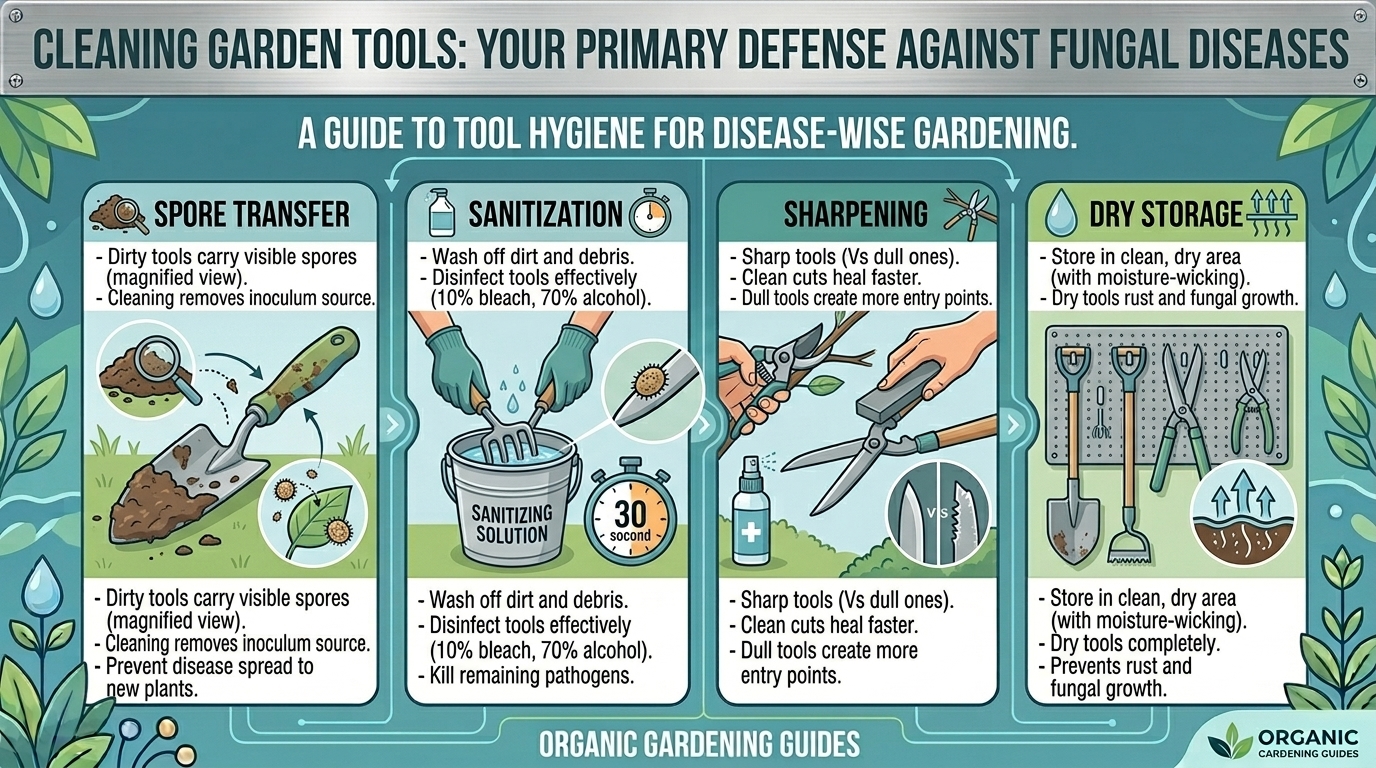
| Sanitation | Pruning Shears & Isopropyl Alcohol | 70% alcohol solution | Disinfects tools between cuts to prevent cross-contamination |
| Soil Amendment | Horticultural Perlite, Pumice, or Sand | Coarse-grade soil amendments | Improves long-term drainage around rot-prone perennials |
Step-by-Step Guide: Treating Crown Rot with Peroxide Drenches
Executing a rescue drench requires precision, patience, and careful adherence to dilution ratios. Never pour undiluted 3% hydrogen peroxide directly onto plant roots, as high oxidation can scorch and destroy delicate feeder roots.
Phase 1: Dilution Ratios and Preparation
- Calculate Your Mixture: For an active crown rot rescue treatment, use a 1:4 or 1:5 dilution ratio of 3% hydrogen peroxide to water. Mix 1 part standard 3% hydrogen peroxide with 4 parts clean water (e.g., 1 cup of 3% peroxide to 4 cups of water, or 1 quart per gallon).
- Test Soil Moisture: Ensure the soil around the affected perennial is slightly moist before applying the drench. Pouring peroxide into bone-dry soil can cause root shock.
Phase 2: Excavation and Debris Removal
- Expose the Crown: Carefully pull back mulch, compost, or soil away from the base of the infected perennial using a trowel until the crown is fully exposed to air and light.
- Prune Infected Tissue: Using sterilized pruning shears, surgically cut away any dead, mushy, or blackened stems and rotting root tissue. Dip your shears in 70% isopropyl alcohol after every single cut to avoid spreading fungal spores to healthy tissue.
- Clear Debris: Remove all pruned rotting matter, fallen leaves, and contaminated surface soil immediately from the bed and discard it in the trash (do not compost diseased plant material).
Phase 3: Applying the Peroxide Drench
- Pour the Drench: Slowly pour your diluted hydrogen peroxide solution directly over the exposed crown and surrounding root zone.
- Observe the Reaction: You will notice a gentle fizzing or bubbling action as the peroxide oxidizes active fungal spores, bacteria, and organic debris. This is completely normal and indicates the treatment is working.
- Leave the Crown Exposed: Do not immediately backfill soil over the freshly treated crown. Leave the top 1 to 2 inches of the crown exposed to sun and air for 3 to 5 days to allow the plant tissue to dry out and heal (suberize).
Regional Considerations for Crown Rot Management
Environmental conditions dictate how frequently and aggressively crown rot manifests across different growing zones:
- Texas: High summer temperatures combined with heavy clay soils create intense crown rot pressure, especially on cool-season perennials during torrential downpours. Amend heavy clay beds with expanded shale or coarse sand to improve subsurface drainage.
- New York and the Northeast: Spring thaw and lingering winter moisture often saturate perennial beds. Inspect plants as winter mulch is pulled back in early spring to catch early signs of crown rot before active growth begins.
- California: Coastal moisture from morning marine layers and frequent over-irrigation in clay-heavy garden beds can trigger fungal activity. Adjust drip irrigation schedules so water pools away from the center of perennial clumps.
- Washington and the Pacific Northwest: Relentless winter and spring rainfall makes Washington perennial beds prime candidates for crown rot. Plant susceptible perennials (like delphiniums and hostas) on slight slopes or raised mounds to shed excess water.
- San Francisco: Cool, foggy urban microclimates keep topsoils damp for extended periods. Avoid piling organic mulch directly against perennial stems; leave a 2-inch “breathing ring” of bare soil around every crown.
Long-Term Preventative Strategies for Perennial Beds
Treating active crown rot saves an individual plant, but preventing future outbreaks requires modifying your overall garden management practices:
- Never Bury Crowns Too Deep: When planting new perennials, ensure the crown sits 1/2 inch to 1 inch above the surrounding soil level. Settling will eventually bring it level with the bed, preventing water from pooling directly in the center of the plant.
- Implement the “Mulch Ring” Rule: Organic mulch is fantastic for moisture retention, but piling wood chips or shredded bark directly against perennial stems traps moisture and invites rot. Keep mulch at least 2 to 3 inches away from plant bases.
- Divide Overcrowded Clumps: Perennials that form dense, congested clumps (like hostas, daylilies, and bee balm) lose interior airflow, trapping humidity around their crowns. Divide mature clumps every 3 to 4 years in early spring or autumn.
- Improve Soil Drainage: Incorporate compost and coarse grit into heavy soils. If your perennial bed sits in a natural low spot where water pools after rain, consider converting it into a raised bed.
Troubleshooting Common Crown Rot Treatment Issues
- Issue: The plant tissue turned brown and looked scorched after applying the peroxide drench.
- Solution: Your dilution ratio was likely too strong, or you used a higher commercial concentration (like 10% or 35% food grade) without diluting it properly. Always stick to a 1:4 dilution of standard 3% household peroxide.
- Issue: The crown rot returned a few weeks after treatment.
- Solution: The fungal infection had already penetrated deep into the vascular core of the root system before treatment began. Severely infected plants with rotted core tissue cannot be saved and must be removed entirely to protect neighboring plants.
- Issue: Green algae or white mold is growing on the exposed soil around the crown.
- Solution: The soil is remaining too damp due to lack of sunlight or airflow. Scrape away the top layer of contaminated soil, apply a light dusting of agricultural cinnamon (a natural antifungal powder), and improve air circulation.
Frequently Asked Questions (FAQ)
1. Can hydrogen peroxide really cure crown rot in perennials?
Yes, in the early to moderate stages of infection, a diluted hydrogen peroxide drench oxidizes active fungal pathogens, destroys surface spores, and oxygenates the root zone, allowing the plant to heal.
2. What dilution ratio of hydrogen peroxide should I use for soil drenches?
Use a 1:4 ratio of standard 3% household hydrogen peroxide to water (1 part 3% peroxide mixed with 4 parts water). Never pour undiluted peroxide onto plant roots.
3. Will hydrogen peroxide kill beneficial soil bacteria and earthworms?
When used at the recommended 1:4 dilution, hydrogen peroxide targets active pathogens and localized anaerobic bacteria while breaking down harmlessly into water and oxygen. However, excessive or continuous drenching can disrupt local microflora, so use it as a targeted rescue treatment rather than a weekly fertilizer.
4. How do I know if my perennial has crown rot or root rot?
Crown rot specifically attacks the stem-to-root junction at or just below the soil line, often showing white fungal threads or mushy stem bases. Root rot primarily affects the underground feeder roots deep in the soil profile. Both share similar above-ground symptoms of sudden wilting and yellowing.
5. Why should I leave the crown exposed after applying the drench?
Exposing the treated crown to air and sunlight for 3 to 5 days accelerates drying (suberization) of the plant tissue, creating a natural dry barrier that prevents surviving fungal spores from re-infecting the wound.
6. Can I use food-grade (35%) hydrogen peroxide for this treatment?
Exercise extreme caution. Food-grade hydrogen peroxide is 35% concentrated and extremely caustic; it can cause chemical burns and instantly kill plant tissue if mishandled. It must be heavily diluted down to a 3% equivalent before use, making standard 3% over-the-counter peroxide a much safer choice for home gardeners.
7. What perennials are most susceptible to crown rot?
Perennials with fleshy crowns or dense foliage clumps—such as hostas, delphiniums, bleeding hearts, peonies, coral bells (Heuchera), and echinacea—are particularly prone to crown rot if soil drainage is poor.
8. How can I improve poor soil drainage in existing perennial beds?
You can improve existing beds by carefully working organic compost and coarse grit (such as horticultural pumice or poultry grit) into the surrounding soil, or by lifting the perennials and replanting them on slightly elevated mounds.
9. Is there a natural powder I can use alongside peroxide to prevent rot?
Yes! Ground cinnamon is a fantastic, all-natural organic fungicide. After pruning away rotted crown tissue, dusting the clean wound with cinnamon helps inhibit fungal spore germination.
10. Where can I find more expert plant care guides and organic gardening tips?
For comprehensive horticultural advice, regional gardening strategies, and expert plant health resources tailored to your backyard, visit kcplants.com.
Conclusion
Crown rot can feel like a devastating blow when it strikes your cherished perennial flower beds, but it doesn’t have to be a death sentence for your garden. By harnessing the powerful oxidizing and oxygenating properties of natural hydrogen peroxide soil drenches, combined with proper excavation, surgical pruning, and long-term moisture management, you can stop fungal pathogens in their tracks. Whether you are maintaining urban courtyard plots in San Francisco or expansive landscape beds in Texas, this simple, chemical-free technique restores health and vigor to your perennial collection.