What Are the Best Natural Deterrents to Keep Squirrels from Digging Up Your Newly Planted Bulbs
Autumn is a season of glorious transition in the garden. As summer blooms fade and crisp breezes sweep across the landscape, gardeners eagerly tuck tulip, crocus, hyacinth, and daffodil bulbs into the earth, anticipating a vibrant tapestry of color when spring returns. There is a deep, therapeutic joy in planting these dormant treasures.
That joy, however, can quickly turn to utter frustration the very next morning when you walk out to your garden beds only to find fresh mounds of excavated earth, pillaged planting holes, and chewed bulb remnants scattered across the mulch. Gray and fox squirrels are notoriously intelligent, highly observant, and relentless foragers. When food sources tighten ahead of winter, they view your freshly turned garden soil and nutrient-dense bulbs as a personal subterranean buffet.
While commercial chemical repellents and physical wire cages are common solutions, many organic gardeners prefer safe, humane, and eco-friendly methods. Whether you are battling urban squirrels in San Francisco, protecting backyard flower beds in New York, managing garden wildlife across California, safeguarding suburban plots in Texas, or dealing with damp soil foragers in Washington, implementing natural deterrents offers a reliable, chemical-free defense.
This comprehensive masterclass explores squirrel behavior, the science of olfactory and textural repellents, physical barrier techniques, and actionable tips to protect your newly planted bulbs.
Understanding the Enemy: Why Squirrels Target Your Bulbs
To outsmart a squirrel, you must understand its foraging psychology. Squirrels do not typically dig up bulbs because they are starving; they do so because they are instinctually driven to hoard food for winter and spring.
- The Visual Cue of Fresh Soil: Squirrels possess exceptional spatial memory. When you dig a planting hole, the freshly turned earth contrasts sharply with the surrounding undisturbed soil, acting as a giant billboard signaling: “Hidden treasure buried here!”
- The Olfactory Signature: Dormant bulbs emit subtle organic scents—starches, sugars, and natural oils—that keen-nosed squirrels can detect right through several inches of loose topsoil.
- Target Preferences: Squirrels have distinct culinary tastes. They adore the sugary, starchy corms of tulips and crocuses, view hyacinths and alliums with moderate suspicion, and will generally leave daffodils, snowdrops, and fritillarias completely alone due to toxic alkaloids stored in the tissue.
The Four Pillars of Natural Squirrel Deterrence
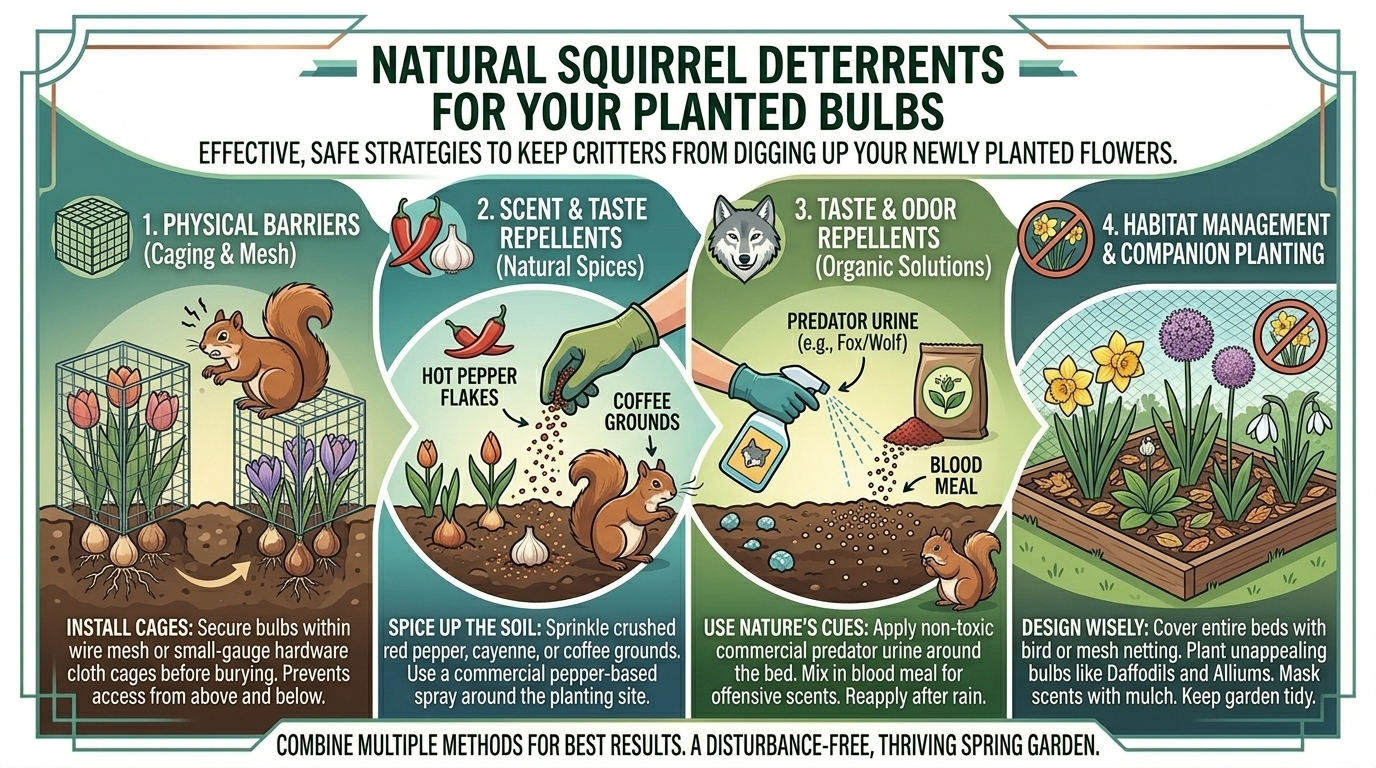
Protecting your bulb investment without resorting to toxic chemicals relies on combining four distinct defense strategies: olfactory deterrents, taste barriers, physical exclusion, and tactical distraction.
1. Olfactory Deterrents (Scents They Hate)
Squirrels rely heavily on their sense of smell to locate food. By saturating the soil and mulch with powerful, pungent aromas that disorient their olfactory senses, you make the planting bed completely unappealing.
- Blood Meal: A nitrogen-rich organic fertilizer that smells like drying blood to a squirrel. Sprinkled lightly over the soil surface, it acts as a powerful predator warning signal while feeding the soil.
- Hot Pepper Infusions (Capsaicin): Liquid cayenne pepper sprays or chili flake dustings irritate a squirrel’s sensitive nasal membranes and paws.
- Essential Oils: Peppermint, eucalyptus, and garlic oils applied via cotton balls or spray deterrents mask the sweet scent of tulip and crocus bulbs.
2. Taste Deterrents (Bulb Coatings)
If a squirrel manages to bypass your surface deterrents and unearths a bulb, the taste test should be its last.
- Hot Sauce and Cayenne Slurries: Dip bulbs in a thick slurry of hot pepper sauce and water before planting.
- Horticultural Talcum or Ground Mustard: Dusting bulbs with pungent dry powders creates a fiery, bitter barrier that discourages chewing.
3. Physical Barriers (Subterranean and Surface Armor)
Physical exclusion is the single most foolproof method for keeping squirrels away from bulbs.
- Chicken Wire or Hardware Cloth: Laying a sheet of galvanized hardware cloth just beneath the soil surface over your bulb beds allows stems to push through in spring while completely blocking paws from digging down.
- Bulb Baskets: Planting bulbs inside heavy-duty plastic or wire bulb baskets creates an impenetrable fortress.
4. Tactical Distraction (Feeding Stations)
Sometimes the best defense is a good diversion. Providing an alternative, highly preferred food source away from your prized flower beds can distract squirrels entirely.
- Dedicated Squirrel Feeding Stations: Set up a squirrel feeder stocked with whole corn, raw peanuts in the shell, and sunflower seeds on the opposite side of your property, far away from your perennial and bulb beds.
Complete Tools and Materials Checklist
| Category | Item | Recommended Specification | Purpose |
| Physical Barrier | Galvanized Hardware Cloth | 1/2-inch mesh grid | Laid flat over bulb beds to block digging |
| Physical Barrier | Wire Bulb Baskets | Heavy-duty steel mesh baskets | Encloses individual bulb clusters underground |
| Olfactory / Taste | Pure Cayenne Pepper / Chili Powder | Bulk food-grade powder | Dusted into planting holes and over topsoil |
| Soil Amendment | Sharp Grit or Pea Gravel | Coarse, sharp-edged stone | Mixed into soil to make digging unpleasant for paws |
| Plant Selection | Toxic / Bitter Bulbs | Daffodils, Alliums, Fritillarias | Naturally immune to squirrel predation |
Step-by-Step Guide: Planting and Protecting Bulbs from Squirrels
Executing a foolproof bulb-planting routine ensures your subterranean investments remain undisturbed all winter long.
Phase 1: Strategic Bulb Selection
- Plant Squirrel-Resistant Varieties: If your yard suffers from severe squirrel pressure, design your spring display around bulbs that contain natural toxic alkaloids or bitter tastes. Daffodils (Narcissus), Alliums, Snowdrops (Galanthus), Grape Hyacinths (Muscari), and Fritillarias are virtually 100% squirrel-proof.
- Protect Vulnerable Favorites: If you insist on planting high-risk treats like tulips and crocuses, reserve them for containers or heavily protected raised beds.
Phase 2: Layered Planting Techniques
- Dig Deep and Wide: Dig your planting trench slightly deeper than standard guidelines (giving tulips 6 to 8 inches of soil coverage). Deeper burial makes scent detection significantly harder for foraging animals.
- Incorporate Sharp Grit: Mix handfuls of sharp horticultural grit, coarse sand, or crushed oyster shells into the backfill soil. Squirrels hate scratching their sensitive paw pads in sharp, abrasive earth.
- Dust with Cayenne: As you fill the hole halfway, dust the soil and bulbs generously with cayenne pepper or commercial hot pepper flakes.
Phase 3: Installing Surface and Subsurface Armor
- The Hardware Cloth Method: Lay a section of 1/2-inch galvanized hardware cloth flat over the soil after planting your bulbs. Cut small X-slits where individual shoots need to emerge in spring, or simply cover the entire bed. Secure the edges with landscape staples or heavy rocks.
- Mulch Camouflage: Cover the hardware cloth with a 2-inch layer of shredded bark mulch or pine straw to conceal the metal grid from view while maintaining an aesthetic garden finish. In early spring, pull the mulch back slightly so tender green shoots can emerge unhindered.
Regional Considerations for Squirrel Management
Environmental factors and local wildlife dynamics influence how aggressive squirrels are across different regions:
- Texas: Texas backyard squirrels (including Eastern fox squirrels) remain active year-round due to mild winters. They are persistent diggers, making physical hardware cloth barriers essential in Texas perennial beds.
- New York and the Northeast: As autumn temperatures drop, Northeastern gray squirrels enter a frantic caching frenzy, burying acorns and digging up freshly planted bulbs with high frequency. Plant bulbs deeper and utilize heavy mulch layers.
- California: In California’s mild Mediterranean climate, suburban squirrels forage constantly. Combine cayenne dustings with drip irrigation management so soil isn’t kept overly muddy, which attracts digging paws.
- Washington and the Pacific Northwest: Abundant rainfall in western Washington can wash away water-soluble deterrent sprays quickly. Rely on dry powdered deterrents (like blood meal or chili flakes) or physical mesh barriers rather than liquid sprays.
- San Francisco: Urban San Francisco squirrels are exceptionally bold and accustomed to human environments. Rely on heavy wire bulb baskets and securely anchored hardware cloth to prevent urban wildlife from pillaging rooftop and courtyard container gardens.
Troubleshooting Common Squirrel Deterrent Issues
- Issue: Squirrels ignored the cayenne pepper and dug up my tulip bed anyway.
- Solution: Rain and irrigation water wash away surface capsaicin quickly. Reapply powdered cayenne pepper weekly after rainstorms, or switch to physical wire mesh barriers for guaranteed protection.
- Issue: Squirrels are digging around the edges of my hardware cloth barrier.
- Solution: Your mesh barrier was likely too small. Ensure your hardware cloth extends at least 6 to 12 inches beyond the actual perimeter of the planted bulb cluster and is firmly staked down with metal landscape staples.
- Issue: Bulbs are sprouting in spring, but squirrels are biting off the tender green flower buds.
- Solution: Once green shoots emerge above ground, underground deterrents no longer protect the top growth. Spray emerging foliage with a bitter apple spray or organic repellent until flowers fully open.
Frequently Asked Questions (FAQ)
1. What are the absolute best natural deterrents for squirrels?
Physical barriers (like galvanized hardware cloth and wire bulb baskets) combined with pungent olfactory deterrents (such as cayenne pepper and blood meal) offer the highest success rate.
2. Do squirrels eat daffodils and alliums?
No. Daffodils, alliums, hyacinths, and fritillarias contain toxic alkaloids and bitter compounds that make them completely unpalatable to squirrels, voles, and deer.
3. How do I keep squirrels from digging in potted bulbs on my patio?
Cover the top soil of your pots with a layer of sharp pinecones, decorative chicken wire cut to fit the rim, or a heavy layer of sharp gravel to physically block digging paws.
4. Does blood meal really deter squirrels?
Yes. Blood meal emits a rich organic odor that mimics the scent of predators or decaying flesh to a squirrel’s sensitive nose, driving them away. However, avoid using it if neighborhood dogs frequent your garden, as they may dig to investigate the scent.
5. How deep should I plant tulip bulbs to prevent squirrels from finding them?
Plant vulnerable bulbs like tulips at a depth of 6 to 8 inches (measuring from the base of the bulb to the soil surface), which makes it much harder for squirrels to sniff them out or dig them up.
6. Can I use human hair or predator urine to stop squirrels?
While old gardening folklore suggests human hair or wolf urine deters pests, squirrels quickly habituate to human scents in urban yards, making physical barriers and capsaicin much more reliable.
7. Why do squirrels dig up bulbs if they don’t always eat them?
Squirrels have an instinctual urge to cache (hide) food for winter. They often dig up newly planted bulbs, carry them away to bury them elsewhere, or take a single bite and discard them if they dislike the taste.
8. Will cayenne pepper hurt my garden plants or soil?
Standard culinary cayenne pepper or chili powder will not harm your soil or bulb roots in moderate amounts; in fact, it acts as a harmless, natural deterrent that washes away over time.
9. What is a bulb basket, and how does it work?
A bulb basket is a shallow, rigid plastic or wire mesh tray designed specifically for planting. You place your bulbs inside the basket, bury the entire basket underground, and roots/stems grow through the gaps while squirrels are completely blocked.
10. Where can I find more expert gardening tips and bulb care guides?
For comprehensive horticultural advice, regional planting calendars, and expert plant care tips tailored to your backyard, visit kcplants.com.
Conclusion
Protecting your newly planted bulbs from eager squirrels requires a smart mix of physical engineering and sensory deterrence. By choosing squirrel-resistant varieties like daffodils, layering pungent organic deterrents like cayenne and blood meal into your soil, and securing your beds with galvanized hardware cloth, you can ensure your autumn labor blossoms into a breathtaking spring display. Whether you are managing urban garden plots in San Francisco or expansive suburban landscapes in Texas, these natural strategies keep your bulbs safe all winter long.