Few garden ailments are as universally frustrating—or as visually unmistakable—as powdery mildew. Whether you are tending prized zucchini and cucumbers in your vegetable patch, nurturing delicate roses in your backyard flower beds, or cultivating ornamental shrubs, walking out to find leaves coated in what looks like a dusting of fine white flour is disheartening.
Powdery mildew is caused by a diverse group of obligate biotrophic fungi (such as Podosphaera, Erysiphe, and Golovinomyces species) that hijack living plant cells to feed and multiply. While countless chemical fungicides line the shelves of garden centers, many organic gardeners and sustainable horticulturists prefer safer, non-toxic alternatives that protect pollinators, beneficial insects, and soil health.
One of the most fascinating, cost-effective, and scientifically backed organic remedies available is sitting right inside your refrigerator: diluted milk.
Whether you are battling humid summer air in Texas, managing damp spring microclimates in New York, protecting backyard crops across California, dealing with moisture-heavy gardens in Washington, or cultivating urban courtyard plots in San Francisco, applying milk spray dilutions offers a powerful, chemical-free weapon against powdery mildew.
This comprehensive masterclass explores the science behind milk sprays, optimal dilution ratios, step-by-step application protocols, and long-term preventative strategies to keep your garden thriving.
The Science of Milk: Why and How It Fights Powdery Mildew
At first glance, spraying dairy milk on garden foliage sounds like an old wives’ tale or an invitation to sour smells and swarming bugs. However, rigorous agricultural research—pioneered in Australia and adopted globally by organic growers—has proven that milk is a remarkably potent natural fungicide.
1. Amino Acids and Photochemical Reactions
When milk proteins (such as casein and globulin) are sprayed onto plant leaves and exposed to sunlight, they undergo a photochemical reaction. This reaction produces free radicals and amino acid derivatives that are directly toxic to fungal spores and mycelium, halting their ability to germinate and spread across the leaf surface.
2. Enhanced Plant Systemic Acquired Resistance (SAR)
Milk acts as an organic elicitor. When absorbed by the plant, components in milk trigger the plant’s natural immune system—a process known as Systemic Acquired Resistance (SAR). The plant responds by producing its own natural phytoalexins (defense chemicals) that reinforce cell walls and make tissues hostile to fungal attack.
3. Antiviral and Antimicrobial Synergy
Beyond powdery mildew, milk proteins possess mild antiviral properties, making milk sprays a dual-purpose tool for gardeners battling mosaic viruses and fungal pathogens simultaneously.
Complete Tools and Materials Checklist
Preparing and applying a milk spray requires basic household kitchen items and standard garden equipment.
| Category | Item | Recommended Specification | Purpose |
| Active Ingredient | Whole Cow’s Milk | Standard 1% to 3.25% dairy milk (skim also works) | The active fungicidal agent |
| Dilution Base | Clean Water | Filtered, rainwater, or tap water | Dilutes the milk to prevent leaf residue buildup |
| Application Tool | Pump-Action Garden Sprayer | 1-to-2-gallon plastic pressure sprayer | Ensures a fine, even mist across all leaf surfaces |
| Surfactant (Optional) | Pure Liquid Castile Soap | 2 to 3 drops | Helps the milk solution adhere to waxy leaves |
| Sanitation | Pruning Shears | Sharp bypass pruners | Removes heavily infected foliage prior to spraying |
Step-by-Step Guide: Mixing and Applying Milk Sprays
Achieving success with milk sprays requires precise dilution ratios and proper timing. Applying milk at the wrong concentration or under incorrect weather conditions can lead to sour odors or secondary pest attraction.
Phase 1: Determining the Optimal Dilution Ratio
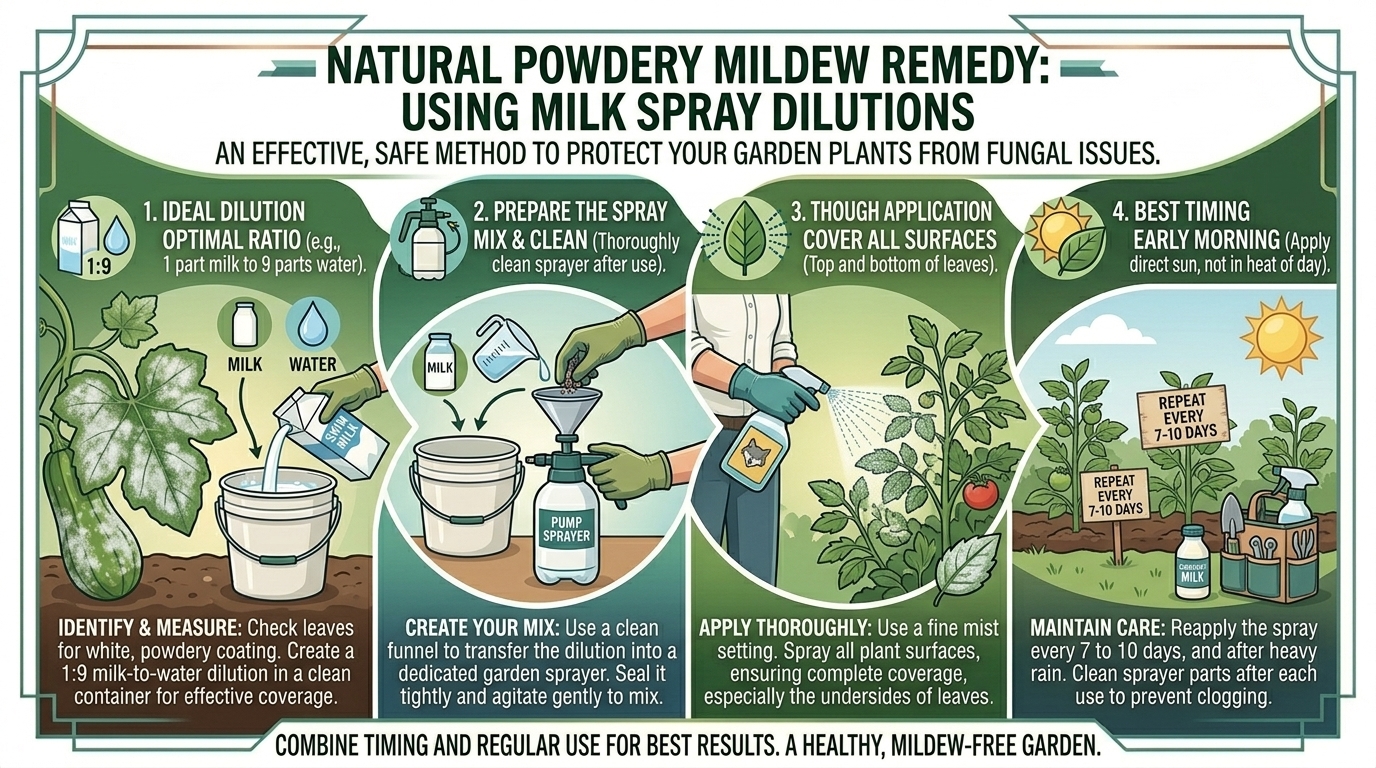
- The Standard Ratio: The most widely recommended and tested ratio is 1 part milk to 9 parts water (a 10% solution). For severe infections, a 1:5 ratio (20% milk) can be used, though higher concentrations increase the risk of sour milk odors and greasy residue.
- Example Recipe: Mix 1 cup of whole milk with 9 cups of water in a gallon container.
Phase 2: Preparation and Plant Hygiene
- Prune Severely Infected Leaves: If a plant is heavily infested, use clean pruning shears to snip off the worst of the infected leaves. Do not compost severely diseased tissue; discard it in the trash.
- Shake Well: Ensure your milk and water are thoroughly blended inside the sprayer tank.
Phase 3: Application Timing and Technique
- Apply in Full Sunlight: Unlike many traditional garden sprays that must be applied at dusk to avoid leaf scorch, milk sprays require direct sunlight to activate their photochemical fungicidal properties. Apply your spray in the morning on a sunny day.
- Coat Both Sides of the Leaves: Pump your sprayer and mist the plant thoroughly. Pay special attention to the undersides of leaves, where powdery mildew spores frequently colonize.
- The 7-to-10-Day Rule: Reapply your milk spray every 7 to 10 days as a preventative measure, or immediately after a heavy rainstorm washes the residue off the foliage.
Regional Considerations for Milk Spray Applications
Environmental conditions influence how powdery mildew behaves and how milk sprays interact with your local climate:
- Texas: Intense summer heat and humidity create explosive powdery mildew cycles on squash, melons, and crape myrtles. Apply milk sprays early in the morning before temperatures soar past 90°F.
- New York and the Northeast: Late-summer humidity swings in the Northeast make cucurbits highly vulnerable. Regular weekly milk sprays starting in mid-summer keep backyard vegetable patches pristine.
- California: Coastal California gardens exposed to heavy morning fog experience chronic moisture retention on leaves. Apply milk sprays on sunny mornings when the marine layer burns off, allowing sunlight to activate the treatment.
- Washington and the Pacific Northwest: Abundant rainfall can wash away milk residue quickly. Ensure you add 2-3 drops of castile soap to your mix as a surfactant to help the solution cling to wet foliage during damp periods.
- San Francisco: Cool, foggy urban microclimates demand careful timing. Utilize sunny micro-windows in the afternoon to apply sprays, ensuring adequate air circulation to prevent souring.
Preventing Powdery Mildew: Cultural Best Practices
While milk sprays serve as an exceptional natural treatment, combining them with smart cultural practices stops powdery mildew before it starts:
- Maximize Airflow: Space plants correctly and prune dense interior foliage. Stagnant air and crowding trap humidity, encouraging fungal spores to germinate.
- Morning Watering: Always water plants at the base (using drip irrigation or soaker hoses) in the early morning. Avoid splashing water onto leaves, and never water overhead at night.
- Choose Resistant Varieties: When purchasing seeds or starts, look for disease-resistant cultivars (such as mildew-resistant cucumbers, squash, and pumpkins).
- Avoid Excess Nitrogen: High-nitrogen fertilizers cause rapid, tender, succulent leaf growth that is highly susceptible to fungal penetration. Use balanced, slow-release organic fertilizers.
Troubleshooting Common Milk Spray Issues
- Issue: The sprayed plants are developing a sour smell and attracting flies.
- Solution: Your milk dilution ratio was too high (too much milk, not enough water), or you applied it during heavily overcast, humid weather where it failed to dry properly. Reduce your concentration to a 1:10 ratio and spray only on sunny days.
- Issue: A thick, greasy white film is building up on the leaves.
- Solution: Using whole milk with high fat content can leave a residue. Switch to low-fat or skim milk, which contains the necessary proteins and sugars without the heavy milk fats.
- Issue: Powdery mildew is still spreading despite regular milk sprays.
- Solution: The infection has advanced beyond the point where topical natural remedies can cure it. Remove severely diseased plants entirely to protect surrounding healthy crops.
Frequently Asked Questions (FAQ)
1. Does milk really work against powdery mildew?
Yes. Scientific studies and extensive organic gardening trials show that milk proteins undergo a photochemical reaction in sunlight that produces free radicals toxic to powdery mildew fungi, while also boosting the plant’s natural immune system.
2. What is the best milk-to-water dilution ratio?
The standard and most effective dilution ratio is 1 part milk to 9 parts water (a 10% solution).
3. What type of milk should I use for garden sprays?
Skim or low-fat milk is ideal because it provides the necessary proteins and amino acids without leaving a heavy, rancid fat residue on the leaves. Whole milk can also be used if diluted properly.
4. Do I need to apply milk spray in the sunlight or shade?
You must apply milk spray in sunlight. The fungicidal mechanism relies on a photochemical reaction activated by UV light and sun exposure.
5. Will milk spray attract pests like ants or hornets?
When properly diluted (1:10) and applied in full sun where it dries quickly, milk spray does not attract pests. However, using heavy concentrations or spraying in dark, humid conditions can create a sour residue that draws insects.
6. How often should I reapply the milk spray?
Apply milk spray every 7 to 10 days as a preventative treatment, or reapply immediately after heavy rainfall washes the protective residue off the foliage.
7. Can I use milk spray on indoor houseplants?
Yes, you can use diluted milk spray on indoor houseplants suffering from powdery mildew, provided the plant receives bright sunlight or a strong grow light to activate the treatment and prevent souring.
8. Will milk spray harm my garden soil or beneficial insects?
No. Milk is a completely organic, non-toxic food product. It breaks down harmlessly in the environment and poses zero threat to earthworms, bees, ladybugs, or beneficial soil microbes.
9. What plants are most commonly affected by powdery mildew?
Cucurbits (squash, cucumbers, pumpkins, melons), nightshades (tomatoes, peppers), roses, crape myrtles, and phlox are among the most frequently affected plants.
10. Where can I find more expert organic gardening tips and plant care guides?
For comprehensive horticultural advice, regional gardening strategies, and expert plant health resources tailored to your backyard, visit kcplants.com.
Conclusion
Managing powdery mildew organically does not require expensive, toxic chemical fungicides. By harnessing the power of simple milk dilutions combined with sunlight, you can neutralize fungal spores, stimulate your plants’ natural immune defenses, and protect your harvest safely and affordably. Whether you are tending urban container gardens in San Francisco or expansive backyard plots in Texas, this time-tested organic remedy keeps your plants vibrant, healthy, and mildew-free.