For generations, standard agricultural and backyard gardening advice revolved around a single heavy-duty ritual: breaking out the rototiller every spring, turning over the topsoil, and pulverizing the earth into a fine, smooth powder. Gardeners were taught that tilling aerated the ground, cleared out weeds, and prepared a soft bed for seeds.
Modern soil science and regenerative horticulture have completely upended this old-school dogma. We now know that mechanical tilling acts like a devastating earthquake to the underground ecosystem. Every time you turn over your garden soil, you slice apart delicate mycorrhizal fungal networks, expose millions of dormant weed seeds to sunlight, and oxidize precious organic matter into thin air.
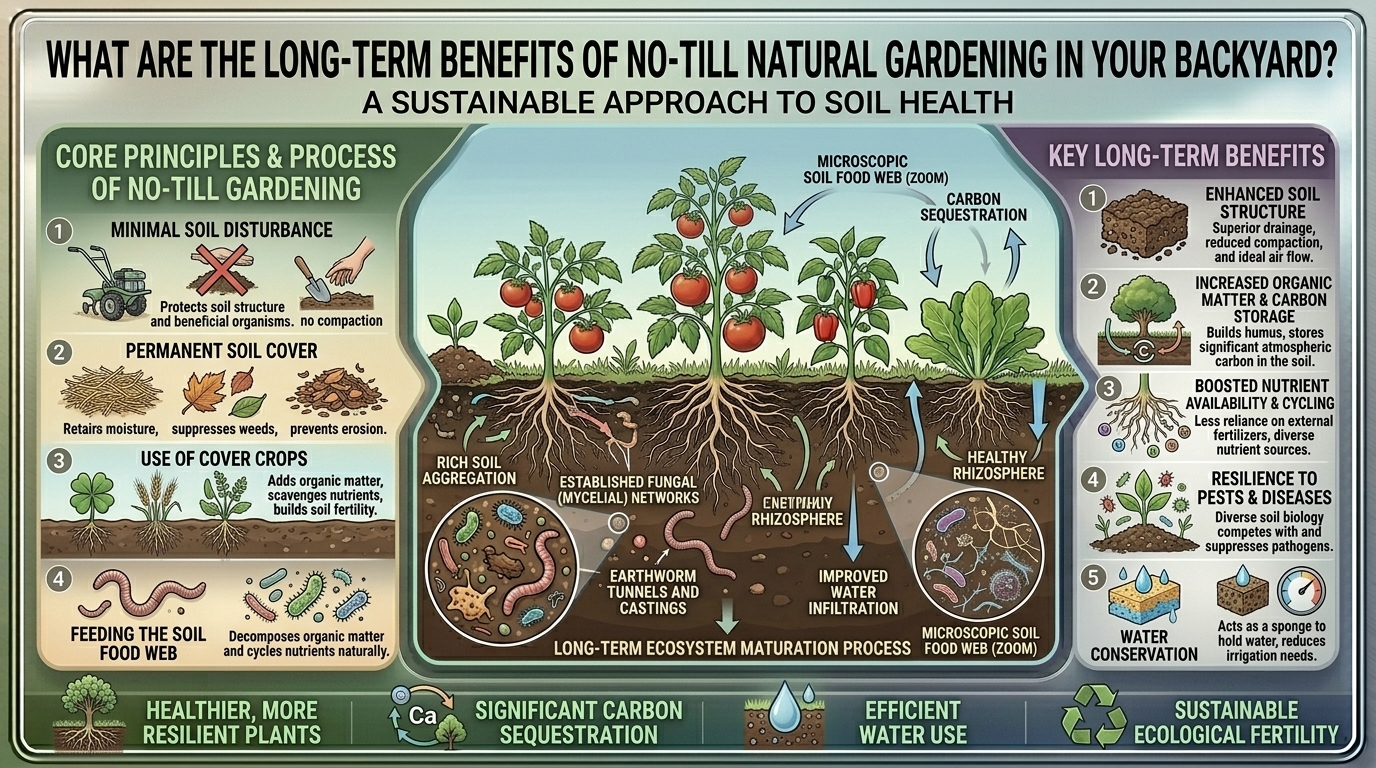
Shifting to no-till natural gardening methods—where soil is left undisturbed and fertility is built entirely from the top down using organic mulches, compost, and cover crops—yields profound long-term rewards.
Whether you are managing baking clay in Texas, balancing urban courtyard containers and raised beds in San Francisco, tackling suburban garden plots in New York, or working with moisture-rich soils across Washington State and California, this comprehensive guide explores the extraordinary long-term benefits of embracing no-till gardening in your backyard.
1. The Living Soil Ecosystem: What Happens Beneath the Surface?
To understand why no-till gardening transforms backyard productivity, you must look at soil not as dirt, but as a complex living metropolis.
The Soil Food Web
Healthy soil teems with billions of beneficial bacteria, actinomycetes, protozoa, nematodes, earthworms, and mycorrhizal fungi.
- The Symbiotic Trade: Mycorrhizal fungi form microscopic thread-like networks (hyphae) that attach directly to plant roots, vastly expanding the plant’s root surface area. In exchange for plant sugars, these fungi mine water and trace minerals from deep within the earth and deliver them directly to your crops.
- The Tillage Disruption: When you rototill a garden bed, heavy steel tines shred these intricate fungal superhighways, temporarily shutting down plant nutrient absorption and forcing the soil ecosystem to spend weeks rebuilding its foundational workforce.
2. Key Long-Term Benefits of No-Till Natural Gardening
Embracing a strict no-till philosophy pays massive dividends that compound over successive growing seasons:
[ Long-Term No-Till Evolution ]
       │
       ├──> 1. Massive Accumulation of Soil Organic Matter (Humus)
       │
       ├──> 2. Enhanced Drought Resilience & Water Retention
       │
       ├──> 3. Permanent Suppression of the Weed Seed Bank
       │
       └──> 4. Superior Plant Immunity & Reduced Pest Pressure
1. Exponential Increase in Soil Organic Matter (Humus)
In a tilled garden, oxygen floods the soil rapidly, causing soil microbes to burn through organic carbon at an unsustainable rate (rapid oxidation).
- The No-Till Advantage: By layering organic compost, leaf mold, and mulch strictly on top of the soil, you feed the microbes gradually. Over years, this builds a thick, dark, nutrient-dense layer of humus that increases your soil’s natural fertility without requiring synthetic chemical inputs.
2. Exceptional Drought Resilience and Water Retention
Tilled soil forms a hard surface crust after heavy rains, shedding water and drying out quickly under summer heat.
- The Spongy Matrix: No-till soils maintain a stable, aggregate structure held together by fungal glues (glomalin) and earthworm burrows. This creates a sponge-like matrix that absorbs rainfall like a reservoir, reducing your garden’s irrigation requirements by up to 50% during dry summer months.
3. Exhausting the Underground Weed Seed Bank
Every square foot of garden soil contains thousands of dormant weed seeds. Tilling brings those buried seeds up to the sunlit surface, triggering massive weed explosions.
- The Burial Effect: In a no-till system, you cover beds with cardboard sheet mulch and organic bark. Because you never disturb the lower soil layers, buried weed seeds remain trapped in perpetual darkness where they eventually lose viability and rot harmlessly away.
4. Natural Pest and Disease Resistance
Plants grown in undisturbed, biologically active no-till soil develop higher Brix (sugar and mineral) levels and robust cellular walls. They naturally exude complex secondary metabolites through their roots that signal beneficial insects and microbes, drastically reducing susceptibility to destructive pests and fungal pathogens.
3. Practical Implementation: How to Transition to No-Till
Converting an existing tilled plot or establishing a new no-till garden bed requires a straightforward, step-by-step approach:
Step 1: Drop the Tiller and Sheet Mulch
If you are starting with a weed-infested lawn or an old tilled plot, do not dig it up.
- Lay down overlapping layers of plain, unprinted brown corrugated cardboard directly over the ground to smother all existing weeds and grass.
Step 2: Build from the Top Down (Lasagna Gardening)
- Dump a 3-to-4-inch layer of rich organic compost directly on top of the cardboard barrier.
- Cover the compost with an insulating top-layer of organic mulch (such as shredded hardwood, clean straw, or leaf mold) to retain moisture and regulate soil temperature.
Step 3: Plant Directly Through the Layers
Plant your vegetable transplants directly into the compost layer by parting the mulch and slicing a small hole through the damp cardboard below. As your plants grow, earthworms and soil microbes will chew upward through the cardboard, converting the underlying sod and paper into rich humus while leaving soil structure intact.
4. Regional Realities: No-Till Gardening Across U.S. Climates
Regional environmental factors influence how quickly no-till beds establish and thrive:
California & San Francisco
- Climate Challenge: Dry Mediterranean summers and urban water restrictions make retaining soil moisture an absolute priority for backyard growers.
- No-Till Strategy: Thick applications of arborists’ wood chips and compost mulch protect urban raised beds and container setups in San Francisco from baking sun and severe moisture loss.
Texas
- Climate Challenge: Heavy clay soils bake into concrete-like blocks when dry, making manual digging grueling and destructive.
- No-Till Strategy: No-till is a game-changer in Texas. By letting earthworms and organic matter break down heavy clay from the top down, gardeners avoid battling concrete soil while building deep, crumbly topsoil.
New York
- Climate Challenge: Humid summer heat waves and heavy seasonal thunderstorms test soil drainage and weed suppression.
- No-Till Strategy: Annual spring applications of chopped leaf mulch and straw prevent heavy New York rains from eroding topsoil or packing down garden bed surfaces.
Washington State
- Climate Challenge: Extended cool, damp autumns and springs can waterlog flat garden plots, suffocating plant roots.
- No-Till Strategy: Elevated no-till raised beds combined with coarse conifer bark mulch ensure superior drainage and continuous air exchange during heavy rainy seasons.
5. Frequently Asked Questions (FAQ)
1. Won’t the soil become too compacted if I never till it?
A common misconception is that soil naturally packs down unless loosened with a shovel. In reality, tilling causes long-term compaction by destroying soil aggregates and burning up organic matter. True no-till soils utilize earthworms, plant roots, and organic matter to maintain permanent, biological porosity.
2. How do I plant seeds in a no-till garden if I don’t turn the soil?
For fine seeds (like carrots or lettuce), simply clear a narrow 1-inch line of surface mulch away, press the seeds lightly into the compost layer, and cover them gently with a light dusting of fine vermiculite or compost. For larger vegetable transplants, use a trowel or bulb planter to dig a small individual planting hole.
3. How do I incorporate organic fertilizers and amendments without tilling?
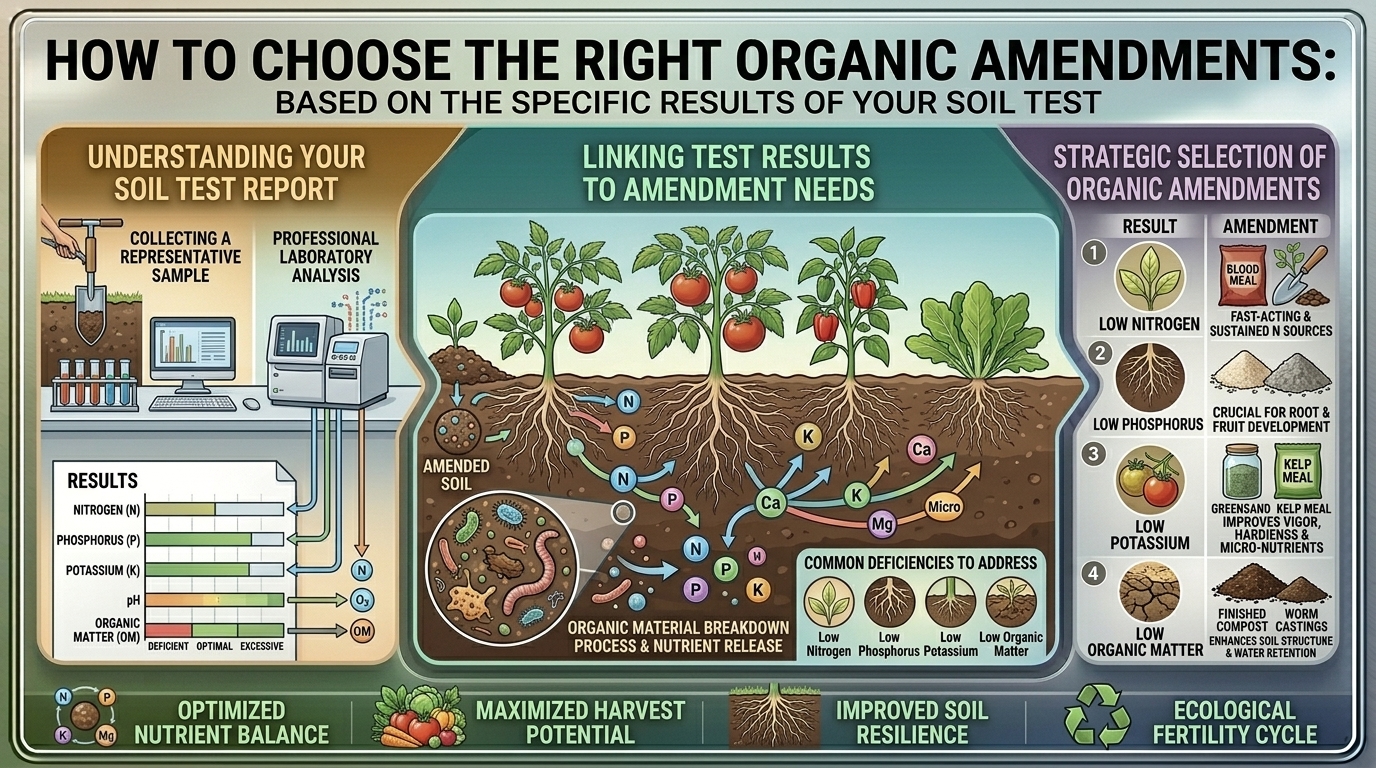
In a no-till system, you apply mineral amendments (like rock dust, lime, or organic fertilizer) as a surface top-dressing right before applying a fresh layer of compost or mulch. Rainwater, earthworms, and biological activity gradually wash and pull the nutrients down into the root zone.
4. How long does it take for a newly converted no-till bed to become productive?
While you can plant immediately using the sheet-mulching method, true no-till soil structure improves dramatically over 2 to 3 consecutive seasons. As organic matter accumulates and microbial networks mature, plant vigor and soil crumb structure increase exponentially.
5. Can I convert a heavily compacted clay lawn into a no-till garden?
Yes, and it is much easier than digging! Sheet mulching right over a lawn with cardboard, compost, and thick mulch suffocates the grass, invites earthworms to tunnel through the clay, and builds a rich, fluffy topsoil bed on top without breaking a single shovel blade.
6. Do weeds ever grow in a no-till garden?
Yes, but significantly fewer than in a tilled garden. Wind-blown weed seeds will occasionally land on top of your mulch layer. However, because these weeds only root in the loose, fluffy mulch rather than the dense soil below, they can be plucked out effortlessly with two fingers.
7. Does no-till gardening eliminate the need for crop rotation?
No-till and crop rotation work hand-in-hand. While no-till preserves soil structure and microbial networks, practicing smart crop rotation (moving plant families like tomatoes, brassicas, and legumes to different beds each year) remains vital for preventing soil-borne diseases and managing specific pest cycles.
8. What is the best material to use for no-till surface mulch?
Shredded hardwood bark, clean straw (free of weed seeds), chopped fall leaves (leaf mold), and composted yard waste are premier organic mulches. Avoid synthetic rubber mulch or dyed wood chips containing chemical additives.
9. Will a no-till garden attract rodents or pests?
Applying organic mulch correctly (keeping it a couple of inches away from direct contact with plant stems and tree trunks) prevents pests from nesting. In fact, thriving no-till soils attract beneficial predators like ground beetles, toads, and spiders that actively hunt garden pests.
10. Can I practice no-till gardening in small containers or raised beds?
Absolutely! Container gardening and raised beds are inherently no-till environments. Simply refresh your containers or raised beds each spring by scraping off the very top inch of spent debris, topping it off with fresh organic compost and worm castings, and planting directly into it.
Conclusion
Practicing no-till natural gardening methods in your backyard is much more than a trendy horticultural technique—it is a return to how nature builds fertile, resilient earth. By abandoning the rototiller, protecting fragile fungal networks, and building soil fertility from the top down with organic compost and mulch, you unlock superior water retention, eliminate relentless weed pressure, and cultivate remarkably productive plants.
Whether you are gardening on a sunny San Francisco deck, transforming heavy clay in Texas, or maintaining thriving plots across New York, Washington, and California, embracing no-till organic gardening guarantees a sustainable, low-maintenance, and abundantly fruitful harvest year after year.
Have you made the switch to no-till gardening in your backyard beds, and what improvements have you noticed in your soil structure and plant health?