Why Maintaining Proper Airflow Between Backyard Garden Plants Drastically Reduces Fungal Disease Outbreaks
Every backyard gardener eventually faces the heartbreaking reality of walking out to their Eden only to find powdery mildew coating squash leaves, black spot marring prized roses, or early blight destroying tomato vines. Fungal pathogens are ubiquitous in the environment; microscopic spores drift silently on the wind, splash upward from the soil during rainstorms, and lie dormant in plant debris waiting for the right moment to strike.
However, the presence of fungal spores alone does not guarantee a disease outbreak. Fungi require one critical catalyst to germinate, colonize, and devastate garden plants: moisture. Specifically, they need stagnant, humid microclimates where water lingers on leaf surfaces for extended periods.
This is where plant spacing and physical architecture play a vital role. Maintaining proper airflow between backyard garden plants is the single most effective cultural control method available to gardeners for drastically reducing fungal disease outbreaks. By optimizing the movement of air through your garden beds—whether you are gardening in the humid coastal air of Texas, the damp spring climate of New York, the Mediterranean microclimates of California, the misty rain shadow of Washington, or the breezy urban backyards of San Francisco—you disrupt the ideal breeding grounds of pathogens like Botrytis, Phytophthora, and powdery mildew.
This comprehensive masterclass explores the science of microclimates, the mechanics of airflow, strategic garden design, and actionable tips to keep your backyard plants robust, dry, and disease-free.
The Science of Fungal Pathogens: Why Humidity and Stagnant Air Breed Disease
To understand why airflow matters, you must understand how common garden fungi operate. Fungi are primitive organisms that reproduce via microscopic spores. When a spore lands on a plant leaf, stem, or fruit, it requires moisture to activate.
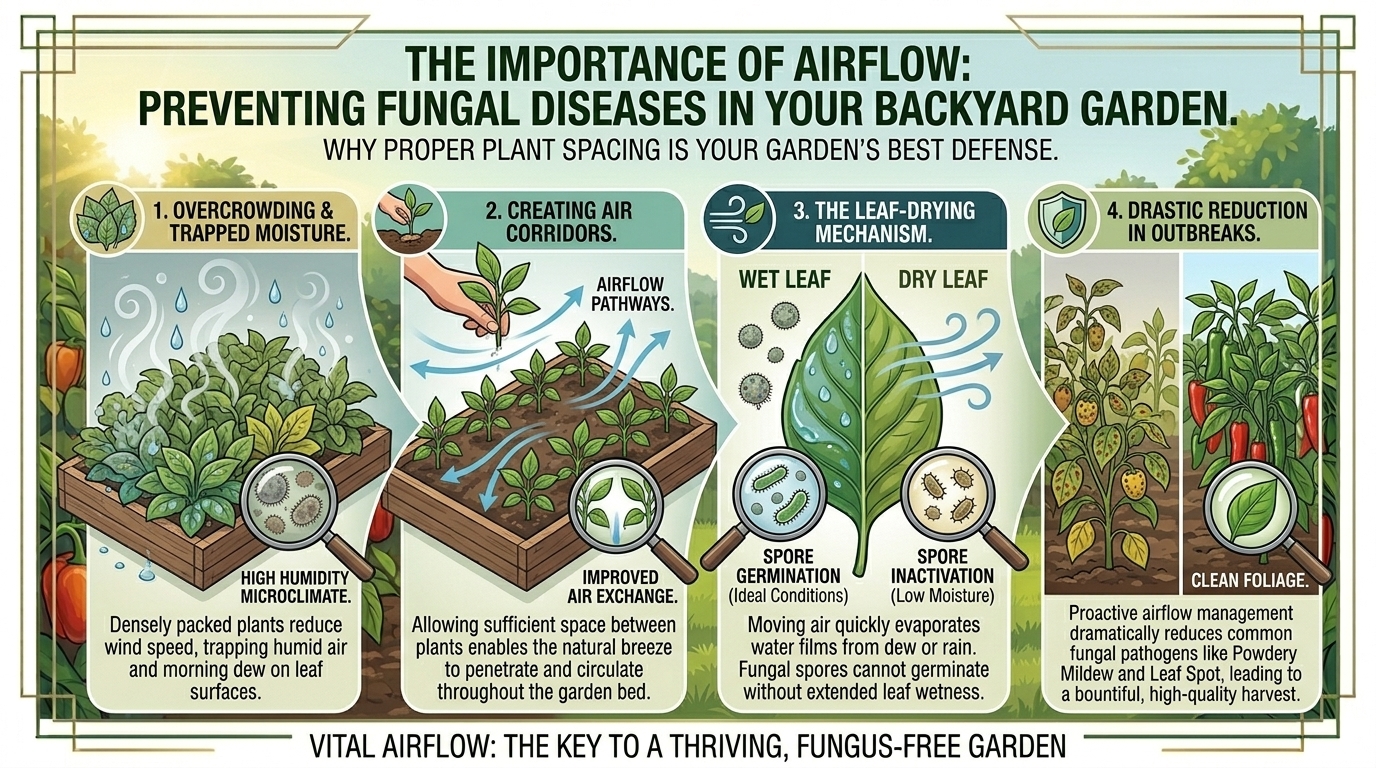
- The Germination Window: Most fungal spores require a leaf surface to remain wet for 4 to 12 consecutive hours to successfully germinate and penetrate plant tissue. If air circulation is restricted, dew, rain, and irrigation water cannot evaporate quickly, extending the “wetness duration” and giving spores ample time to infect the plant.
- The Humidity Trap: Dense plant foliage creates a microclimate—a localized atmospheric zone trapped inside the canopy. When plants are jammed tightly together, this trapped air becomes saturated with humidity transpired from the leaves. Stagnant, humid air acts as an incubator, accelerating fungal spore production and secondary infections.
- The Splash-Dispersal Loop: When rain or overhead irrigation hits wet soil, it splashes fungal spores living in the mulch up onto lower leaves. If airflow is poor, those wet lower leaves stay damp, allowing splashed spores to take root instantly.
How Proper Airflow Disrupts the Disease Triangle
In plant pathology, disease requires three elements: a susceptible host, a virulent pathogen, and a favorable environment. This is known as the Disease Triangle. While you cannot always eliminate susceptible plants or microscopic pathogens, you have complete control over the environment. Proper airflow alters that environment in three distinct ways:
1. Accelerated Foliage Evaporation
Air movement acts as a natural fan. When a gentle breeze passes through a well-spaced garden canopy, it drastically increases the rate of evaporation. Moisture from morning dew, heavy rain, or overhead watering disappears from leaf surfaces within minutes rather than hours, cutting off the vital moisture window required for fungal germination.
2. Disruption of Relative Humidity
Dense canopies trap transpired water vapor, pushing local relative humidity inside the foliage past 90%. Adequate spacing allows ambient breezes to flush out this trapped moisture, lowering relative humidity around stems and leaves below the threshold where fungi thrive.
3. Sunlight Penetration and UV Sterilization
Proper spacing does not just let air in; it lets sunlight in. Ultraviolet (UV) radiation from the sun is a natural sterilizer that inhibits fungal spore viability. When plants are spaced correctly, sunlight penetrates deep into the lower canopy, drying out shaded stems and killing surface pathogens.
Strategic Garden Planning: Spacing, Layout, and Orientation
Achieving optimal airflow begins long before you drop seeds into the soil or transplant seedlings. It starts with layout and design.
| Design Strategy | Recommended Practice | Purpose |
| Row Orientation | Align rows parallel to prevailing winds | Maximizes the natural funneling of breezes through plant corridors |
| Plant Spacing | Adhere strictly to seed packet / tag guidelines | Ensures mature canopies do not overlap or interlock |
| Height Staging | Plant tall crops (trellised tomatoes, corn) on the north side | Prevents tall plants from casting dense, damp shadows and blocking southern airflow |
| Bed Width | Keep raised beds to 3 to 4 feet wide | Allows easy access for hand-pruning and prevents hyper-dense planting |
| Perimeter Clearing | Keep fences and tall hedges clear of garden beds | Prevents boundary walls from trapping stagnant air pockets in small backyards |
Pruning, Training, and Canopy Management Techniques
Even with perfect initial spacing, fast-growing plants will eventually form dense thickets. Continuous canopy management is required to maintain internal airflow throughout the growing season.
1. Thinning and Sucker Removal
- Tomatoes: Indeterminate tomato varieties produce an endless web of side shoots (suckers) between the main stem and leaf branches. Pruning these suckers to maintain a clean, single- or double-leader system prevents the interior of the plant from turning into a dense jungle where blight loves to hide.
- Cucurbits (Squash, Cucumbers, Melons): As sprawling vines grow, carefully lift and direct them along trellises or stakes rather than letting them mat on the ground. Removing older, yellowing lower leaves that touch the soil eliminates the primary entry point for soil-borne fungi.
2. Skirting Lower Foliage
- Remove the bottom 12 to 18 inches of foliage on tall plants like tomatoes, peppers, and eggplants once they reach maturity. This “skirts” the plant, eliminating the leaves closest to splash-splattered soil and opening up a wide corridor of airflow beneath the main canopy.
3. Selective Branch Pruning for Berry Bushes and Fruit Trees
- For backyard fruit crops (berries, figs, stone fruits), practice the “Open Center” (Vase) pruning method. Remove all inward-facing branches, crossing limbs, and water sprouts. Sunlight and wind should be able to pass unobstructed through the center of the plant.
Irrigation Practices That Support Airflow Management
How you water your garden directly impacts the moisture levels that drive fungal outbreaks. Even the best-spaced plants will suffer if irrigation habits counteract airflow benefits.
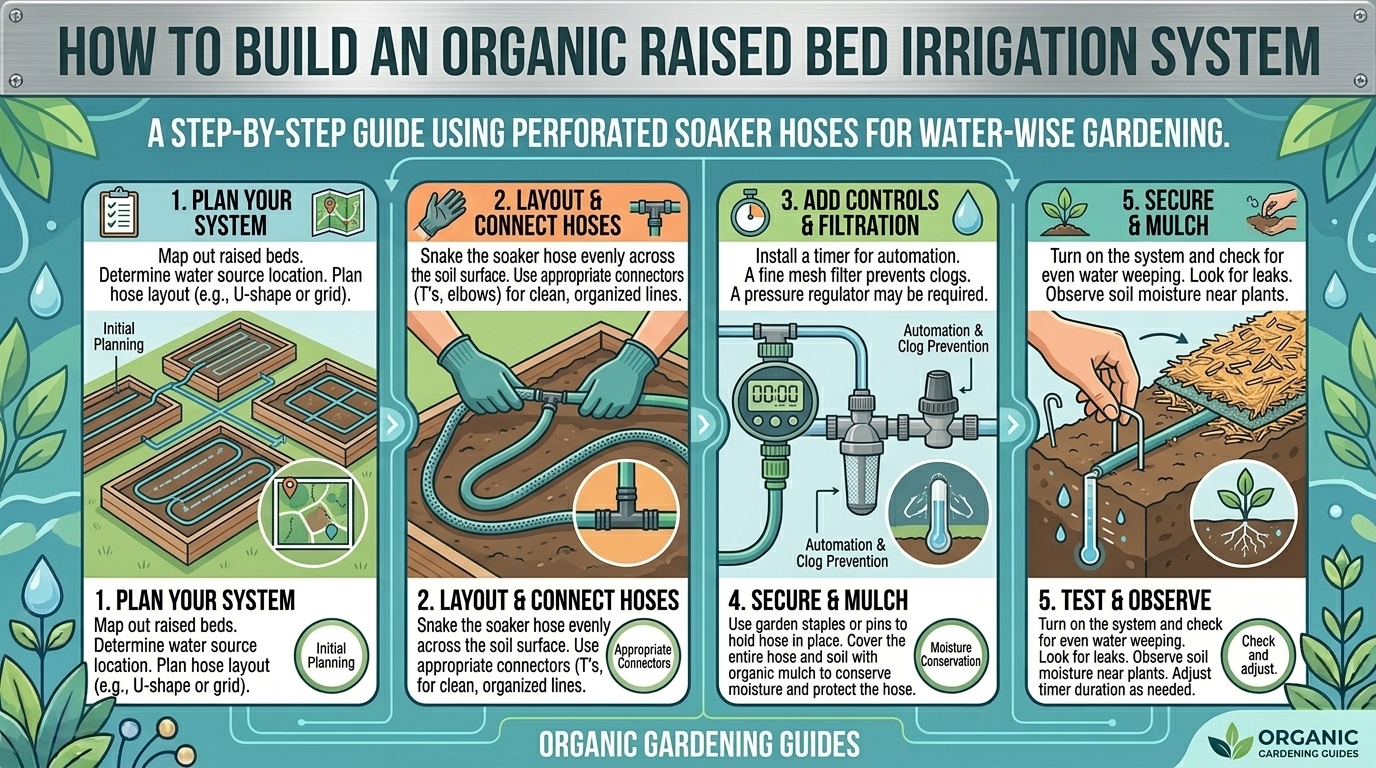
- Drip Irrigation Over Overhead Sprinklers: Transition away from overhead sprinklers or oscillating lawn sprinklers that soak the entire plant canopy. Use drip irrigation, soaker hoses, or hand-watering directly at the soil level. This keeps upper foliage dry and prevents soil splashing.
- Water in the Early Morning: If you must overhead water or wash foliage, do so between 5:00 AM and 8:00 AM. This gives the morning sun and natural daytime breezes hours to dry the leaves completely before nightfall. Never water in the evening; wet foliage sitting in stagnant nighttime air is a recipe for powdery mildew.
Regional Microclimate Challenges and Airflow Solutions
Gardeners face unique environmental challenges depending on their geographic location. Tailoring your airflow strategy to your regional climate is essential:
- Texas (High Humidity and Heat): Southern and coastal Texas humidity creates severe pressure for fungal diseases like black spot and rust. Space plants 25% wider than recommended guidelines and aggressively prune interior foliage to maximize gulf breeze circulation.
- New York and the Northeast (Spring Rains and Heavy Dews): Frequent spring rains saturate garden soil and air. Utilize high-gauge plastic mulch or thick straw mulches to suppress soil splashing, and elevate vining crops onto sturdy trellises.
- California (Coastal Fog and Inland Dryness): Coastal California backyards (including the Bay Area and Los Angeles) experience heavy morning marine layers. Plant beds perpendicular to coastal fog drift corridors, and avoid planting dense hedges too close to delicate vegetable plots.
- Washington and the Pacific Northwest (Misty, Wet Winters and Springs): In the damp Pacific Northwest, maximizing sun exposure and wind-drying corridors is critical. Avoid low-lying, enclosed backyard corners; position raised beds in the highest, breeziest sections of your yard.
- San Francisco (Urban Wind and Micro-Fog): San Francisco backyards often experience unique urban wind tunnels mixed with rolling fog. While natural wind is abundant, high gusts can snap brittle plants. Use semi-permeable windbreaks (like lattice fencing or staggered shrubbery) rather than solid walls to filter wind gently through the garden rather than blocking it entirely.
Troubleshooting Common Airflow and Fungal Issues
- Issue: Powdery mildew is appearing on squash and pumpkin leaves despite wide spacing.
- Solution: Your plants may be receiving too much nitrogen fertilizer, causing rapid, succulent leaf growth that crowds itself out. Switch to a balanced, low-nitrogen organic fertilizer and prune away severely infected leaves immediately.
- Issue: Fungal spores are spreading rapidly from neighboring overgrown yards.
- Solution: While you cannot control your neighbor’s yard, you can plant a clean, breathable buffer zone of aromatic herbs (like rosemary, thyme, and mint) that naturally discourage pests and improve local biodiversity while maintaining your own strict plant spacing.
- Issue: Backyard fences are blocking wind and trapping moisture in my raised beds.
- Solution: If possible, replace solid wooden fence panels adjacent to your garden beds with decorative horizontal slat fencing or wire mesh to restore natural cross-ventilation.
Frequently Asked Questions (FAQ)
1. How does proper plant spacing actually stop fungal diseases?
Proper spacing allows natural breezes to pass freely through plant canopies. This rapid air movement evaporates dew and irrigation water quickly, denying fungal spores the 4-to-12-hour wetness window required to germinate and infect plant tissue.
2. What is the recommended minimum spacing for common backyard vegetables?
As a general rule, bush beans require 4 to 6 inches, peppers need 18 to 24 inches, tomatoes need 24 to 36 inches (depending on determinate vs. indeterminate), and sprawling vine crops like squash need 3 to 4 feet of clearance between mounds.
3. Can I use electric fans in a backyard greenhouse or covered patio garden?
Yes! In enclosed backyard greenhouses, hoop houses, or covered patio spaces where natural wind is absent, oscillating clip-on fans running 24/7 provide essential air circulation that drastically cuts down on damping-off disease and mold.
4. Does pruning lower leaves really reduce plant diseases?
Absolutely. Removing the bottom 12 to 18 inches of foliage (“skirting”) keeps leaves away from splash-splattered soil pathogens and opens up a clear ventilation channel beneath the main plant canopy.
5. Is drip irrigation better than overhead watering for preventing fungus?
Yes. Drip irrigation delivers water directly to the soil root zone, keeping upper leaves completely dry. Overhead watering soaks the foliage and splashes soil-borne fungal spores directly onto lower leaves.
6. What time of day is best to water plants if foliage gets wet?
Always water in the early morning (between 5:00 AM and 8:00 AM). Morning sun and daytime breezes ensure leaves dry rapidly. Evening watering leaves foliage wet all night in stagnant air.
7. How does high humidity contribute to fungal outbreaks in dense gardens?
Dense plant canopies trap transpired moisture, creating microclimates where relative humidity exceeds 90%. This stagnant, humid air acts as a direct incubator for fungal spore reproduction and mycelial growth.
8. How do I manage airflow in small urban backyards with limited space?
In compact urban yards, maximize vertical gardening. Use trellises, stakes, and hanging systems to grow crops upward rather than outward, which minimizes ground footprint and maximizes air circulation.
9. Are certain plant varieties naturally more resistant to fungal diseases?
Yes. When purchasing seeds or transplants, look for disease-resistant cultivars (often labeled with codes like VFN for Verticillium, Fusarium, and Nematode resistance, or specific blight and mildew tolerance codes).
10. Where can I find more expert tips on backyard garden health and plant care?
For comprehensive guides, climate-specific gardening tips, and expert horticultural advice tailored to backyards across major regions, visit kcplants.com.
Conclusion
Maintaining proper airflow between backyard garden plants is much more than an aesthetic choice for a tidy yard—it is a foundational pillar of organic plant health and disease prevention. By understanding how moisture, humidity, and stagnant air interact with fungal pathogens, you can design, space, prune, and water your garden with intention. Whether you are battling coastal fog in San Francisco, humidity in Texas, or spring rains in New York, optimizing airflow will transform your backyard garden into a resilient, thriving sanctuary.